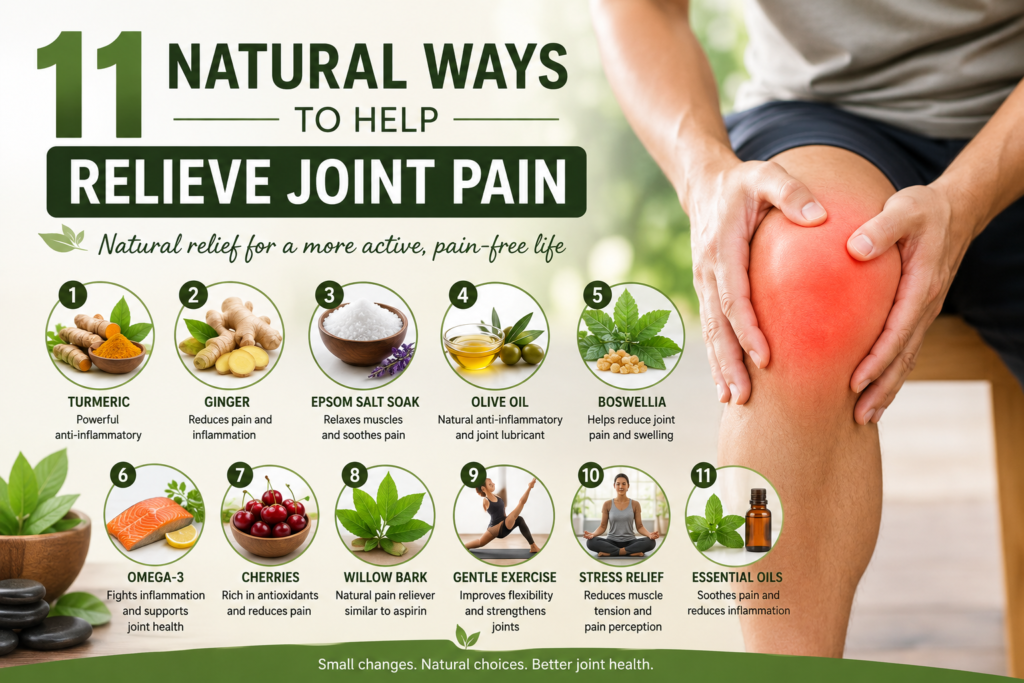
8 Natural Treatments for Knee Pain

You can often manage mild to moderate knee pain at home with simple measures such as rest, ice, gentle exercise, and weight management. However, some treatments promoted as natural remedies may not be effective or may cause side effects.
The best approach depends on what is causing your knee pain. An injury, arthritis, inflammation, or another condition may require different treatment. If your pain is severe, persistent, or getting worse, speak with a healthcare professional.
Evaluating Your Knee Pain
Mild knee pain caused by a minor strain, sprain, or arthritis may improve with home care. Several approaches can help reduce discomfort and improve mobility.
Before trying a new treatment, consider the severity and cause of your pain. Home remedies may help with symptoms, but they do not replace medical care when an underlying condition requires treatment.
1. Use RICE for Strains and Sprains
If you twist your knee, fall, or experience a minor strain or sprain, the RICE method may help during the early stages of recovery:
- Rest: Reduce activities that make the pain worse.
- Ice: Apply a cold pack wrapped in a towel for short periods. Never place ice directly on your skin.
- Compression: Use an elastic bandage to help control swelling. Make sure it is not tight enough to cause numbness, tingling, or changes in skin color.
- Elevation: Raise your leg above the level of your heart when possible to help reduce swelling.
Avoid prolonged rest, as too little movement can contribute to stiffness. Gradually return to normal activity as your symptoms improve.
2. Try Tai Chi
Tai chi is a gentle mind-body exercise that combines slow movements, balance, flexibility, and controlled breathing.
Research suggests that tai chi may help people with knee osteoarthritis by reducing pain and improving physical function. Its low-impact movements can also be easier on the joints than some higher-impact activities.
If you have significant pain or an injury, ask your doctor or physical therapist whether tai chi is appropriate for you.
3. Stay Physically Active
Regular physical activity can strengthen the muscles that support your knees and help maintain flexibility. Exercise is particularly important for people with osteoarthritis.
Low-impact activities may be easier on painful knees, including:
- Walking
- Cycling
- Swimming
- Water aerobics
- Tai chi
- Gentle yoga
You may need to temporarily reduce or modify exercise after an injury or during a painful flare-up. A physical therapist can help you choose exercises that match your condition and fitness level.
4. Maintain a Healthy Weight
Extra body weight can increase the load placed on the knees, particularly during activities such as walking or climbing stairs. For people with overweight or obesity and knee osteoarthritis, gradual weight loss may reduce pressure on the joints and improve symptoms.
If weight loss is appropriate for you, a healthcare professional can help you develop a safe nutrition and activity plan.
5. Use Heat and Cold Therapy
Heat and cold can provide temporary relief from different types of knee discomfort.
Cold therapy may help reduce pain and swelling after an injury. Heat may help relax stiff muscles and joints.
Try these safety tips:
- Wrap cold packs in a towel before applying them.
- Avoid placing ice directly on your skin.
- Use heat or cold for about 15–20 minutes at a time.
- Stop if your skin becomes very red, numb, or irritated.
- Avoid heat if the knee is hot and swollen during an inflammatory flare-up.
A warm shower or bath may also help relieve morning stiffness.
6. Consider Herbal Topical Products Carefully
Some herbal topical products contain ingredients such as ginger, cinnamon, mastic, or sesame oil. Small studies have investigated whether these ingredients may help relieve arthritis-related pain.
However, evidence for herbal treatments remains limited. Products can also vary considerably in their ingredients and strength.
Talk with a doctor or pharmacist before using an herbal salve, especially if you take prescription medicines or have an ongoing medical condition.
7. Be Careful With Willow Bark
Willow bark contains salicin, a compound related to the active ingredient in aspirin. It has traditionally been used for pain and inflammation.
However, evidence supporting willow bark for knee pain is limited. It can also cause side effects and may interact with certain medicines.
Do not use willow bark without medical advice if you are allergic to aspirin, take blood-thinning medication, have certain gastrointestinal or liver conditions, or take other medicines that can interact with salicylates.
8. Consider Ginger
Ginger is available as fresh ginger, tea, ground ginger, and dietary supplements. Some research suggests that ginger may provide modest relief from arthritis-related pain.
However, ginger supplements can interact with medications and may not be suitable for everyone. Ask a healthcare professional before taking concentrated ginger supplements, particularly if you take regular medication.
Treatments to Avoid or Use With Caution
Many products and complementary treatments are promoted for knee pain. However, evidence does not support every option.
Some treatments have limited or inconsistent evidence for knee osteoarthritis, including certain dietary supplements and complementary therapies. Avoid replacing proven medical treatment with an unproven remedy.
Dietary supplements can also vary in quality and may interact with medications. Discuss any supplement or complementary treatment with your doctor or pharmacist before using it.
When to See a Doctor
Home treatment may be appropriate for mild knee pain, but some symptoms require professional evaluation.
See a healthcare professional if you have:
- Severe or worsening pain
- Significant swelling
- A visibly deformed knee
- Severe bruising after an injury
- Difficulty putting weight on the leg
- A fever or other signs of infection
- Symptoms that do not improve after a few days
- Knee pain associated with another medical condition
A doctor may examine your knee and, depending on your symptoms, recommend tests such as an X-ray or blood tests.
Prompt evaluation can help identify the cause of knee pain and ensure you receive appropriate treatment.
Important: Natural treatments may help manage symptoms, but they are not appropriate for every cause of knee pain. Seek medical advice when pain is severe, persistent, or accompanied by significant swelling, deformity, fever, or difficulty walking.