Posture and Back Pain: Simple Ways to Protect Your Spine
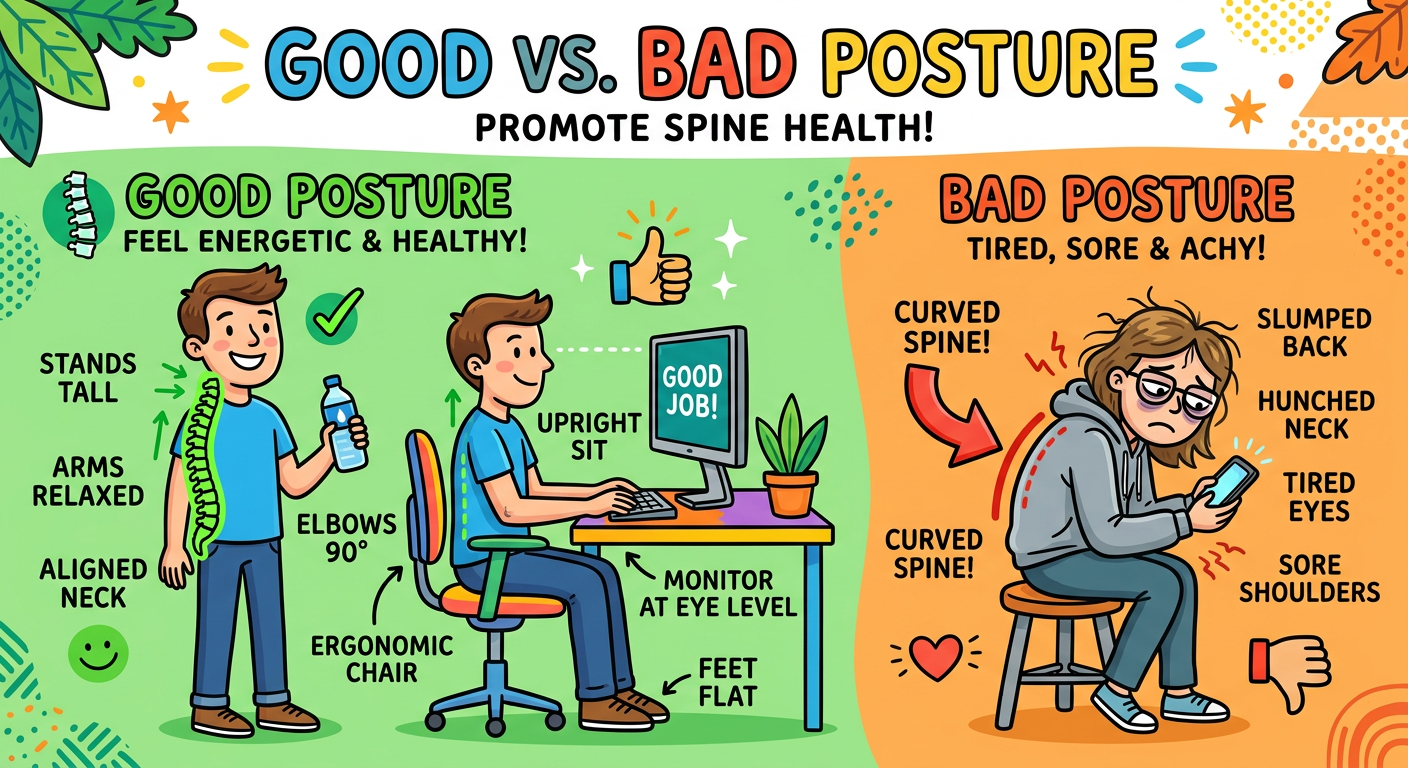
Back pain is common, and spending long hours sitting, working on computers, or using smartphones can contribute to discomfort. However, posture is only one part of the picture. Staying active, changing positions regularly, and building strength are also important for maintaining a healthy back.
How Posture Can Affect Your Back
Slouching or staying in the same position for too long can increase muscle fatigue and discomfort. Poor workplace setup may also contribute to neck, shoulder, and back strain.
Rather than trying to hold a perfectly straight posture all day, focus on comfortable alignment and regular movement.
Simple Tips for Better Back Health
- Change positions frequently: Avoid sitting continuously for long periods. Stand, walk, or stretch regularly.
- Set up your workspace: Keep your screen at a comfortable height and use a chair that supports your back.
- Stay physically active: Walking and other forms of regular exercise can support overall back health.
- Strengthen your muscles: Exercise programs that improve trunk strength, endurance, and movement can help people with low back pain.
- Avoid prolonged bed rest: For many cases of back pain, gradually returning to normal activity is preferable to staying in bed.
For more practical strategies you can incorporate into your daily routine, read our guide to 10 Daily Habits to Help Prevent & Relieve Back Pain.
When to Seek Medical Advice
If back pain is persistent, severe, worsening, or interfering with daily activities, speak with a qualified healthcare professional. Seek urgent medical attention if back pain is accompanied by symptoms such as weakness or numbness in both legs, numbness around the genital or anal area, or new bladder or bowel problems.
Final Thoughts
Good posture is not about sitting perfectly all day. In 2026, the focus is on moving regularly, staying active, improving strength, and creating comfortable daily habits. Small changes to your workspace and routine can make a meaningful difference in back health.