11 Stretches to Help Relieve Tight Shoulders
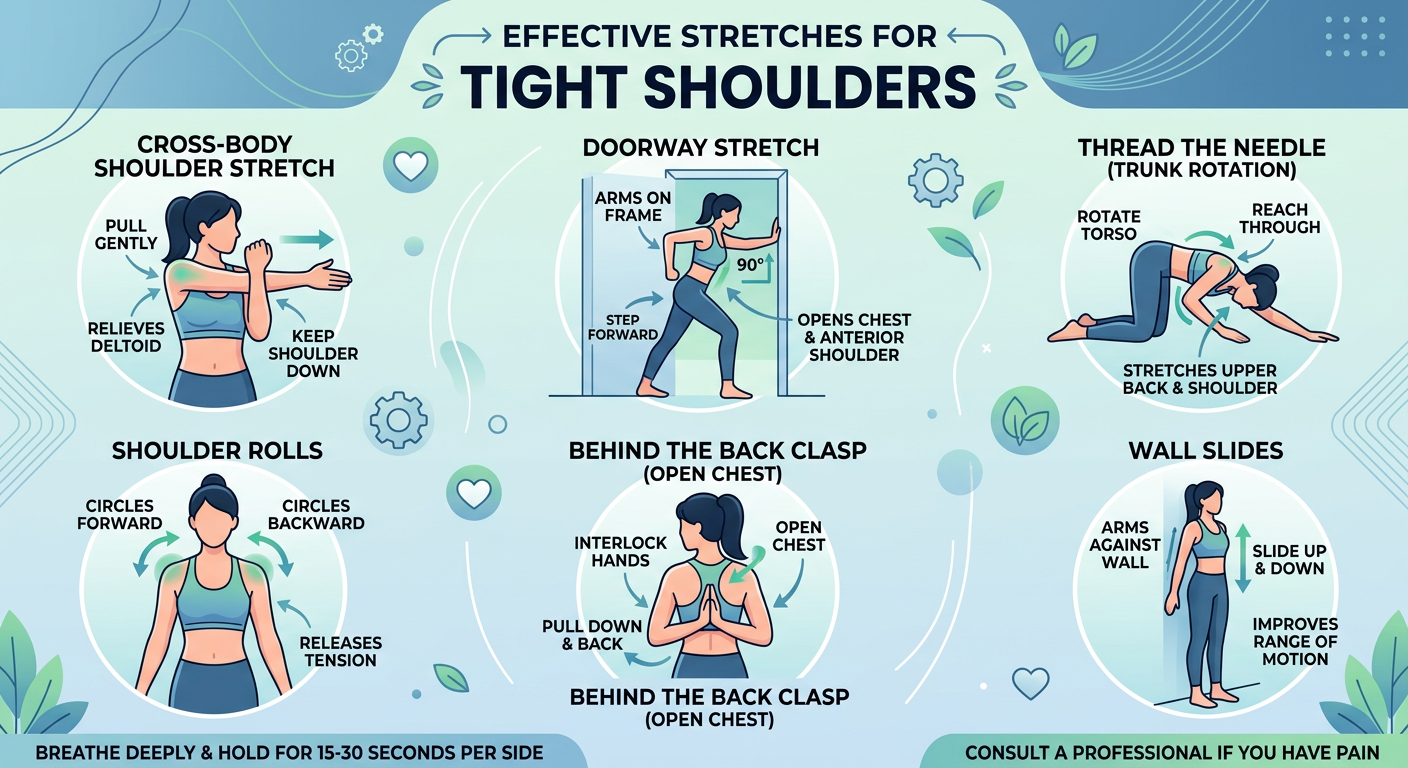
Tight, stiff shoulders can make everyday movements uncomfortable and may contribute to tension in the neck, upper back, and arms. Long hours at a desk, poor posture, stress, repetitive movements, an awkward sleeping position, and overuse can all contribute to shoulder tightness.
The good news is that gentle stretching and regular movement may help loosen tense muscles, improve flexibility, and support a better range of motion. If you’re also looking for practical strategies to support shoulder recovery, see our guide on 6 Proven Ways to Recover From Shoulder Pain Faster.
Below are 11 simple stretches and movements you can try to help relieve tight shoulders. Move slowly, breathe normally, and never force a stretch. If you have severe, persistent, or unexplained shoulder pain, speak with a healthcare professional before exercising.
1. Shoulder Raises
Shoulder raises are a simple way to release tension around the shoulders and upper back.
How to do it:
- Sit or stand upright with your arms relaxed at your sides.
- Slowly lift both shoulders toward your ears.
- Hold the position for a few seconds.
- Slowly lower your shoulders and relax.
- Repeat 5 times.
Try to keep your neck relaxed throughout the movement.
2. Shoulder Rolls
Shoulder rolls can help loosen the muscles around your shoulders and improve mobility.
How to do it:
- Sit or stand with your back straight.
- Roll your shoulders upward, backward, and downward in a smooth circular motion.
- Repeat 10 times.
- Reverse the direction, rolling your shoulders upward, forward, and down.
- Repeat another 10 times.
Keep the movement slow and controlled rather than making large, forceful circles.
3. Ear-to-Shoulder Stretch
This gentle stretch focuses on the side of your neck and the muscles that connect to your shoulder.
How to do it:
- Sit upright with your spine straight.
- Slowly tilt your head toward your right shoulder.
- Keep your left shoulder relaxed and down.
- If comfortable, gently place your right hand on the side of your head to deepen the stretch.
- Hold for about 30 seconds.
- Return to the starting position and repeat on the other side.
Do not pull forcefully on your head.
4. Cross-Arm Shoulder Stretch
The cross-arm stretch targets the back of the shoulder and can be useful after periods of prolonged sitting or repetitive activity.
How to do it:
- Bring your left arm across your chest at about shoulder or chest height.
- Use your right arm to gently support or pull the left arm closer to your body.
- Keep your shoulders relaxed and face forward.
- Hold for about 30 seconds.
- Release and repeat with the opposite arm.
You should feel a gentle stretch—not sharp pain—across the back of your shoulder.
5. Standing Arm Swings
Gentle arm swings encourage movement through the shoulders and can help reduce stiffness.
How to do it:
- Stand upright with your arms relaxed at your sides.
- Swing both arms forward and upward as far as comfortable.
- Avoid shrugging your shoulders toward your ears.
- Lower your arms and gently swing them backward.
- Continue the movement for about 1 minute.
Keep your torso relatively still and let your shoulders do the work.
6. Standing Arm Lifts
Standing arm lifts help move the shoulders through a larger range of motion.
How to do it:
- Stand upright with your feet comfortably apart.
- Make loose fists and position your hands in front of your hips.
- Slowly raise both arms overhead.
- Bring your hands together if this feels comfortable.
- Lower your arms back down.
- Repeat 10 times.
Stop or reduce the range of motion if the movement causes pain.
7. Wide-Legged Standing Forward Bend
This gentle yoga-inspired movement can stretch the shoulders, upper back, and chest.
How to do it:
- Stand with your feet wider than hip-width apart.
- Keep your toes pointing forward.
- Clasp your hands behind your back and gently open your chest.
- Keep a slight bend in your knees.
- Hinge forward from your hips.
- Allow your arms to move gently upward behind you.
- Let your head relax and keep your chin slightly tucked.
- Hold for up to 30 seconds.
- Slowly return to a standing position.
Avoid this stretch if bending forward causes discomfort or dizziness.
8. Cat-Cow Stretch
Cat-cow combines gentle spinal and shoulder movement and may help release tension throughout the upper body.
How to do it:
- Start on your hands and knees.
- Position your hands underneath your shoulders and knees underneath your hips.
- As you inhale, gently lower your abdomen and lift your chest and head.
- As you exhale, engage your abdominal muscles, round your spine, and gently tuck your chin toward your chest.
- Continue moving slowly between the two positions for several repetitions.
Focus on smooth movement and relaxed breathing.
9. Thread the Needle
‘Thread the needle’ is a gentle rotation that targets the shoulder and upper back.
How to do it:
- Begin on your hands and knees.
- Keep your hands beneath your shoulders and your knees beneath your hips.
- Slowly slide your right arm underneath your left arm, palm facing upward.
- Allow your right shoulder and the side of your head to move gently toward the floor.
- Keep your weight controlled rather than collapsing onto the shoulder.
- Hold for about 30 seconds.
- Slowly return to the starting position.
- Repeat on the opposite side.
10. Reverse Prayer Pose
Reverse prayer can open the chest and stretch the shoulders, although it requires a good amount of shoulder and wrist flexibility.
How to do it:
- Sit or stand upright.
- Bring both hands behind your back.
- Turn your palms toward each other and bring them together if comfortable.
- Keep your spine straight and gently draw your elbows backward.
- Open your chest without arching your lower back.
- Hold for about 30 seconds.
- Slowly release.
If you cannot comfortably bring your palms together, simply place your hands behind your back and hold the position without forcing the movement.
11. Cow Face Pose
Cow face pose provides a deeper shoulder stretch and can help improve shoulder flexibility over time.
How to do it:
- Sit comfortably with your spine upright.
- Raise your left arm and bend your elbow so your hand moves down your back.
- Bring your right arm behind your back and reach upward.
- If comfortable, clasp your hands together.
- Keep your chest lifted and avoid forcing your shoulders into the position.
- Hold for up to 30–60 seconds.
- Release slowly and repeat on the opposite side.
If your hands cannot reach each other, use a towel between your hands instead of forcing the stretch.
Benefits of Shoulder Stretches
Regular shoulder stretching may help:
- Reduce muscle tightness and tension
- Improve shoulder flexibility
- Support a greater range of motion
- Reduce stiffness after prolonged sitting
- Encourage better posture and body awareness
- Support comfortable movement during daily activities
- Prepare the shoulders for physical activity
A regular routine is often more useful than stretching intensely once in a while. Even a few minutes of gentle movement throughout the day can help break up long periods of inactivity.
If stretching consistently does not improve your symptoms, or if your pain is getting worse, consider speaking with a healthcare professional.
What Causes Tight Shoulders?
Shoulder tightness can have many possible causes. Some of the most common include:
Prolonged Sitting
Spending hours at a desk or computer can keep your shoulders in one position for too long. Over time, this may contribute to stiffness and muscle tension.
Poor Posture
Rounded shoulders and a forward head position can place additional stress on the muscles of the neck, shoulders, and upper back.
Repetitive Movements
Activities such as typing, texting, driving, lifting, or repetitive overhead movements can contribute to shoulder tension.
Stress
Emotional and physical stress can cause people to unconsciously tense their shoulders. Repeatedly holding this tension may lead to stiffness and discomfort.
Sleeping Position
Sleeping with your neck or shoulder in an awkward position may leave the area feeling stiff when you wake up.
Overuse or Exercise
New workouts, heavy lifting, or repetitive physical activity can temporarily make the shoulder muscles tight or sore.
Injury or Underlying Conditions
Shoulder tightness can sometimes occur alongside an injury or another health condition. Arthritis and other musculoskeletal problems may also affect shoulder movement and comfort.
If tightness is persistent, severe, or accompanied by weakness, swelling, numbness, fever, or significant loss of movement, seek medical advice.
How to Prevent Tight Shoulders
You can take several simple steps to keep your shoulders moving comfortably:
- Stay physically active and include exercises that move the shoulders through their comfortable range of motion.
- Take regular breaks if you sit for long periods.
- Change your sitting position frequently.
- Check your workstation so your screen, chair, and keyboard encourage a comfortable posture.
- Avoid carrying unnecessarily heavy bags.
- Warm up before strenuous exercise.
- Increase workout intensity gradually.
- Pay attention to your posture throughout the day.
- Practice stress-management techniques such as deep breathing, walking, or gentle stretching.
- Stay hydrated, particularly during physical activity.
- Include regular mobility exercises in your routine.
If you spend most of your day sitting, try getting up and moving around every 30–60 minutes.
Frequently Asked Questions
How can I relieve tight shoulder pain?
Gentle movement, stretching, heat, rest from aggravating activities, and improving posture may help with mild shoulder tightness. For additional strategies that may support recovery, see our guide on 6 Proven Ways to Recover From Shoulder Pain Faster. Avoid movements that increase your pain. If symptoms persist or become severe, consult a healthcare professional.
What is the best stretch for tight shoulders?
There isn’t one stretch that works for everyone. Shoulder rolls, cross-arm stretches, ear-to-shoulder stretches, and thread-the-needle are good gentle options for many people. Choose movements that feel comfortable and avoid forcing your range of motion.
How often should I stretch my shoulders?
For general mobility, gentle shoulder stretches can be incorporated into your daily routine. Short sessions throughout the day may be easier to maintain than one long session.
Can stretching make shoulder pain worse?
It can if you stretch too aggressively or if an underlying injury is present. Stretch slowly and stop if you experience sharp, worsening, or unusual pain. Stretching should generally feel gentle rather than painful.
How do I stretch my rotator cuff?
Some shoulder mobility exercises can target the muscles and tissues around the rotator cuff, but the appropriate exercises depend on the cause of your symptoms. If you have a suspected rotator cuff injury or persistent pain, get professional advice before starting a rehabilitation program.
When should I see a doctor about shoulder pain?
Seek medical advice if shoulder pain is severe, lasts for an extended period, follows a significant injury, or is accompanied by weakness, numbness, swelling, fever, or substantial difficulty moving the arm.
Takeaway
Tight shoulders are common and can be linked to prolonged sitting, poor posture, stress, repetitive activities, overuse, sleeping positions, and other factors. Gentle exercises such as shoulder raises, shoulder rolls, cross-arm stretches, cat-cow, and thread the needle may help improve mobility and reduce feelings of stiffness.
The key is consistency. Make gentle shoulder movement part of your daily routine rather than waiting until your shoulders become very tight.
However, stretching isn’t appropriate for every type of shoulder problem. Stop exercising if you experience significant or worsening pain, and consult a healthcare professional if your symptoms are persistent, severe, or accompanied by other concerning symptoms.