
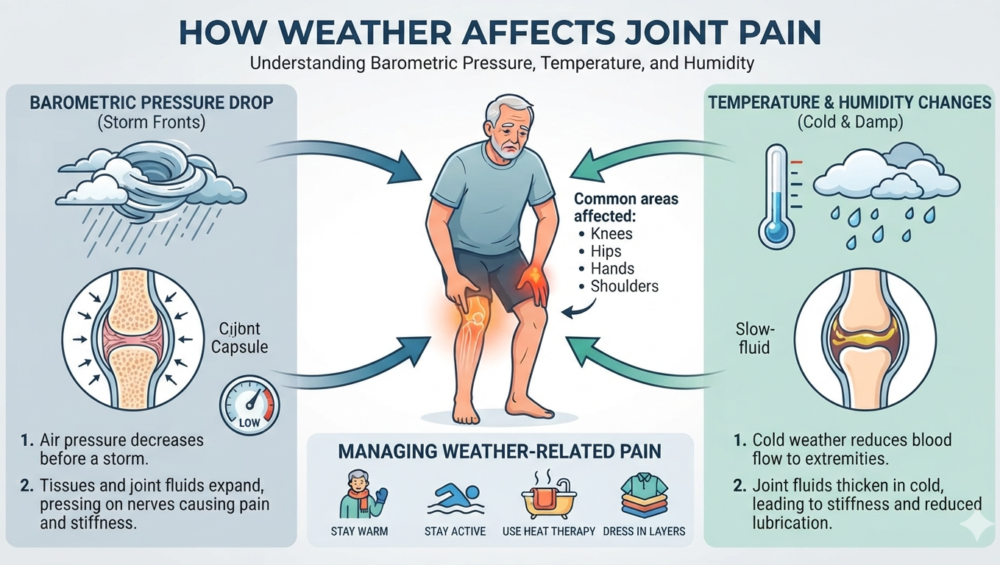
Weather-related joint pain has long been reported by people living with arthritis and other chronic joint conditions. Many notice aching knees, stiff hands, or painful hips before rain or during sudden weather changes. While scientists once dismissed this connection as a myth, growing research suggests that changes in barometric pressure, temperature, and humidity can temporarily increase joint discomfort in some people. Here’s what current research says and what you can do to manage weather-related joint pain.
If weather-related joint pain is affecting your daily activities, professional pain management can help. Visit to learn about treatment options for chronic joint and musculoskeletal pain
Can Weather Actually Cause Joint Pain?
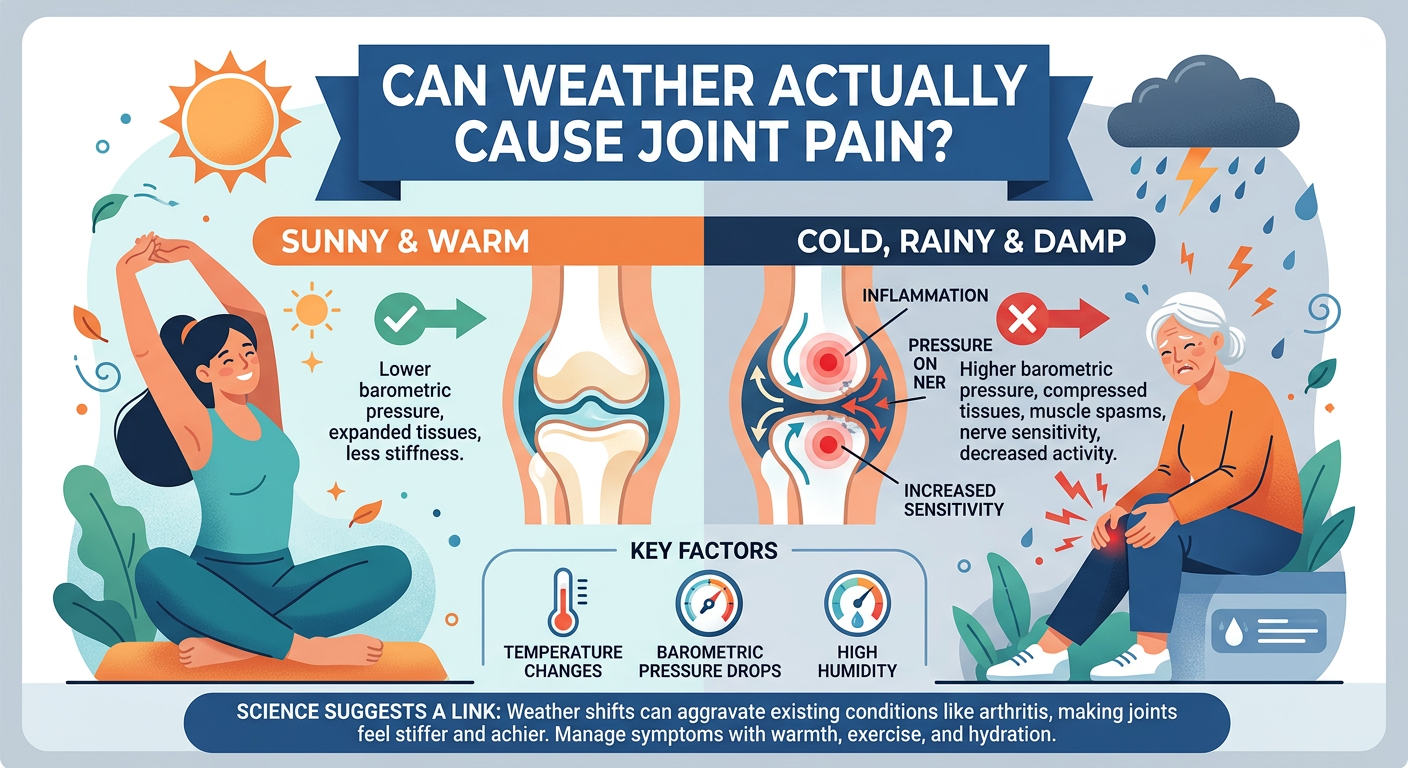
The short answer is yes, but not for everybody.
Research conducted in recent years revealed that people with osteoarthritis, rheumatoid arthritis, fibromyalgia and other musculoskeletal conditions suffer more pain during certain weather changes.
Everybody does not experience the same effects of weather and even if you feel them, their intensity is different. Healthcare providers recognize that environment may worsen pre-existing conditions but it does not actually cause them.
The barometric pressure is the weight of the air above the earth surface.
As soon as barometric pressure decreases, the tissues near the joints become slightly swollen. For healthy joints it means nothing but for the joints with inflammation or injury, this effect may result in increased discomfort.
Usually, this kind of effect is noticed during:

- Decrease in the barometric pressure
- Rapid weather changes
- High humidity with low pressure
Surprisingly, it is not the absolute value of the pressure that triggers the effect but its fast changes.
Why Colder Weather Causes Joint Discomfort
The cold weather itself does not harm your joints but makes movements uncomfortable.
Low temperatures may:
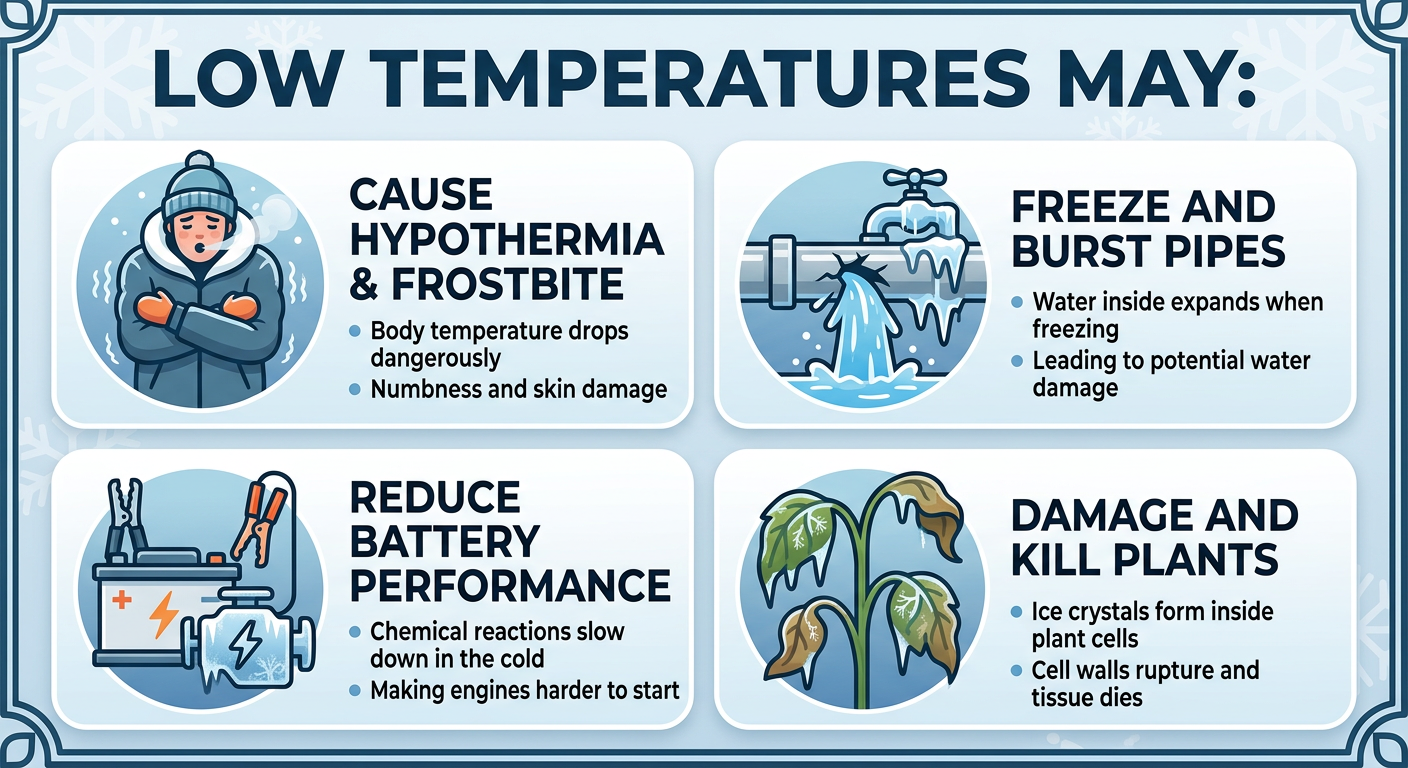
- Make the muscles and tendons tight
- Reduce the joints’ flexibility
- Increase muscle tensions
- Slow blood circulation
- Increase pain caused by inflammation
Also, cold weather makes people less active
Does Humidity Influence Joint Pain?
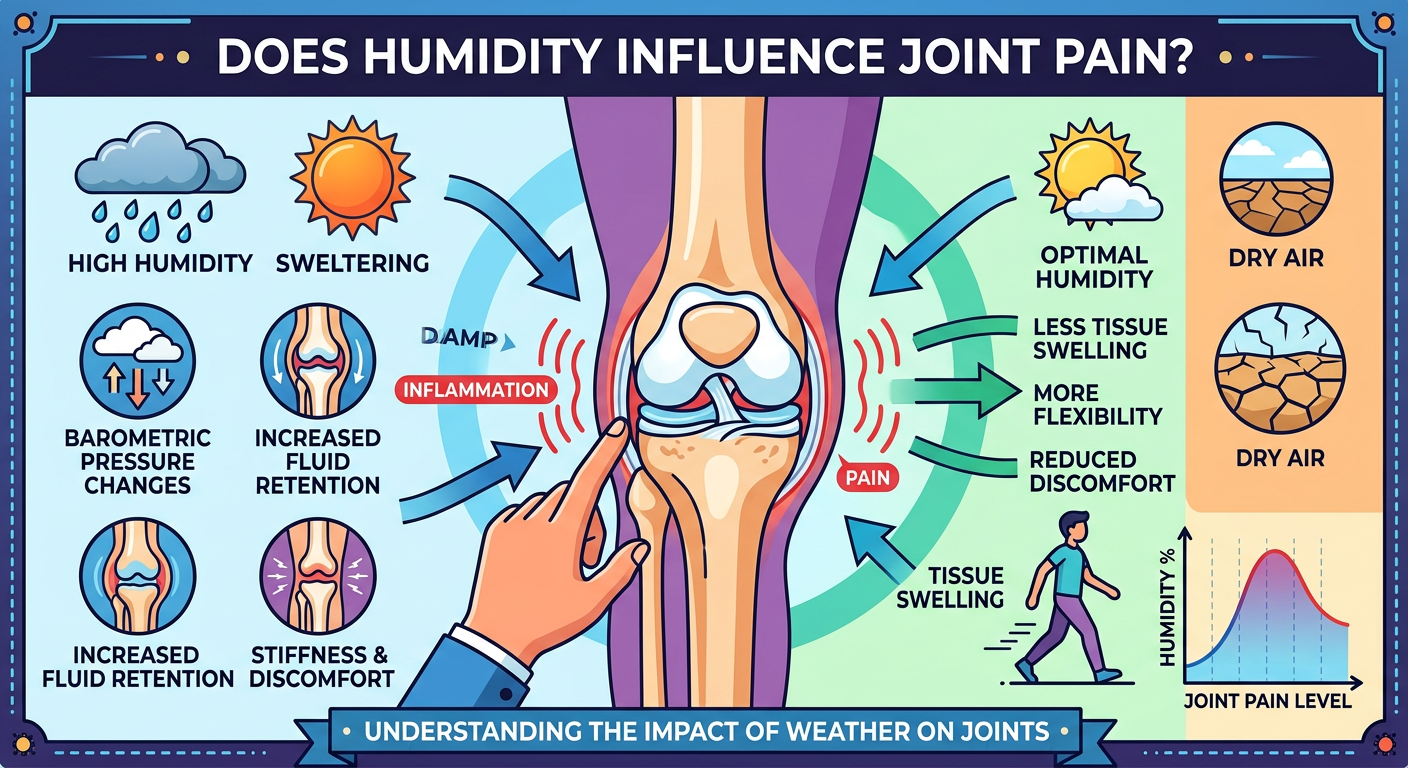
Humidity is one of the most disputed weather parameters.
Some people notice discomfort during high humidity while others do not see the relation between the humidity and joint pains. Researchers believe that high humidity simply increases the effect of the changes in barometric pressure
What Is the State of Art of 2026 Research on This Issue?

New research provides us with new evidences that confirm the relation between weather changes and musculoskeletal pain.
The current findings show that:
- The weather does not cause arthritis
- The weather temporarily increases the pain sensitivity of some people
The strongest relation with weather is associated with changes in barometric pressure and rapid weather changesAlso, scientists study the mechanisms of nervous system perception of weather changes in order to understand why some people are more sensitive than others.
Which Diseases Are the Most Affected?

The most affected by weather changes are people who suffer from:
- Osteoarthritis
- Rheumatoid arthritis
- Gout
- Fibromyalgia
- Chronic back pain
- Injury of joints previously
- Hip and knee replacement
- Tendons disorders
Sometimes even healed fractures may become sensitive to changing weather.
Will Relocation to a Warmer Climate Work?

Many people believe that relocation to a warmer and drier climate solves the problem of joint discomfort.
Unfortunately, there are no guarantees.
Scientists compared the patients who live in different climates and found that weather sensitivity exists practically anywhere. All regions experience some changes in humidity and atmospheric pressure.
The body reacts more to changing conditions than to specific climate.
How to Reduce Joint Pain Caused by Weather Changes
You may not control the weather but you can reduce its negative effects on your joints.
1. Stay Active

The movement helps to keep joints lubricated and reduces stiffness.
Effective low-impact exercises include:
- Walking
- Swimming
- Cycling
- Tai Chi
- Yoga
- Stretching exercises
- Physiotherapists use this expression:
- “Motion is lotion.”
2. Keep Warm

- Warm muscles move better.
- During cold weather you should:
- Dress in layers
- If your hands hurt, wear gloves
- Keep your house warm
- Warm up before training
3. Heat Application
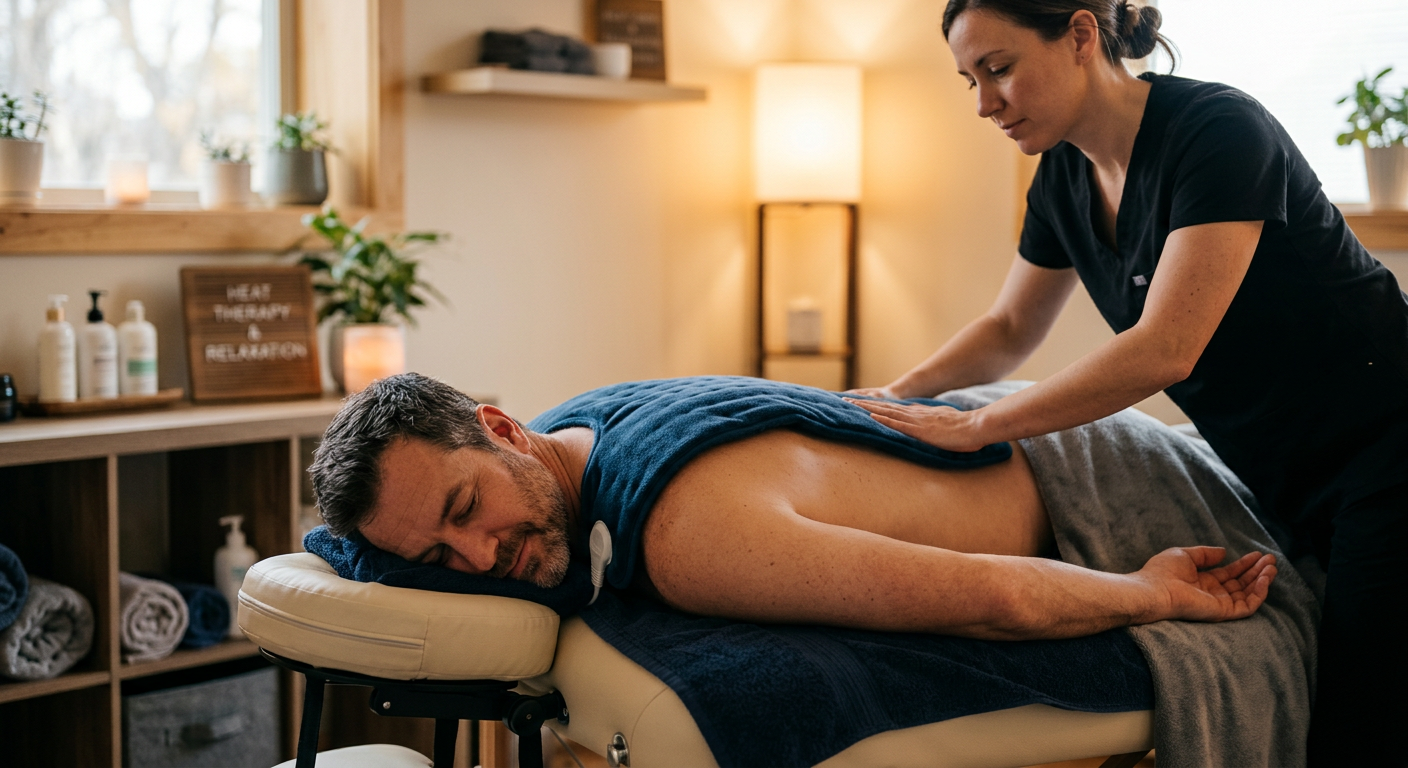
Heat therapy helps to relax the muscles and reduce stiffness.
You may try such methods as:
- Heat pads
- Warm bath
- Hot showers
- Heat wraps
4. Keep Healthy Body Weight

- Any extra weight puts more strain on your weight-bearing joints.
- Even moderate reduction of weight may help you to decrease joint pain and improve movement ability.
5. Eat Anti-Inflammatory Diet

- Balanced nutrition may reduce inflammation.
- Include in your diet:
- Oily fish
- Dark green vegetables
- Berries
- Nuts
- Olive oil
- Whole grain products
- Beans
- Green tea
You may also avoid highly processed products and sugar to reduce inflammation in some cases.
6. Stay Well-Hydrated

- Water contributes to the proper functioning of your muscles and connective tissue.
- Try to drink enough water regularly, especially in hot weather.
7. Get Good Quality of Sleep

- Bad sleep may increase pain sensitivity.
- Consistent bedtime schedule and treatment of sleep disorders will help you to reduce frequent joint pain episodes.
8. Deal With Stress

- Stress makes muscles tense and increases pain.
- Methods for reducing stress:
- Meditation
- Breathing exercises
- Exercise
- Mindfulness
- Spending time outdoors
Should You Take Anti-Inflammatory Drugs?

Anti-inflammatory OTC drugs may help some people during weather flare-ups.
However, it is not suitable for everyone, especially those who suffer from stomach ulcers, kidney diseases, heart diseases and take other medications.
Consult your healthcare provider before taking any medication regularly.
When to Consult Your Doctor?

- Joint discomfort caused by weather changes is usually a temporary issue.
- However, you should see a doctor if you experience:
- Severe joint pain suddenly
- Swelling
- Joint redness and warmth
- Joint pain with fever
- Pain for several weeks
- Difficulty in walking or using a joint
All these symptoms may mean some medical conditions that require treatment.
Conclusion
Although scientists continue studying the relation between weather and joint pain, many people indeed suffer from increased joint pain during weather changes. Low barometric pressure, low temperatures, and rapid weather changes may affect some people more.
Although weather cannot be controlled, regular exercise, keeping warm, an anti-inflammatory lifestyle, stress reduction and collaboration with your healthcare provider will help you to reduce weather flare-ups and enjoy your life all year round.