Yoga Poses for Back Pain: Gentle Stretches to Relieve Pain
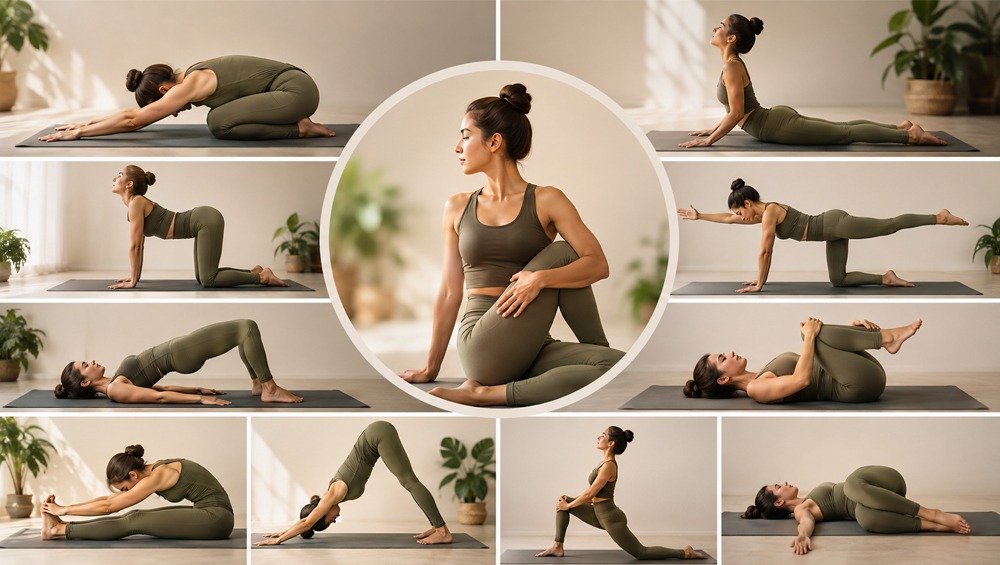
Yoga poses such as Cat-Cow, Downward-Facing Dog, and Triangle Pose may help strengthen and stretch your muscles, which can help relieve back pain.
If you are experiencing back pain, yoga may be a useful addition to your treatment plan. Yoga is a mind-and-body practice that can help manage chronic pain and the stress that often comes with it. Certain yoga poses may also help relax and strengthen the muscles that support your back and follow 10 daily habits to relieve backpain.
With regular practice, even a few minutes of yoga each day may support your overall health and well-being. In addition, yoga can help you become more aware of your body. This awareness may make it easier to notice areas of tension, stiffness, or imbalance.
Below are several yoga poses that may help relieve back pain. Move slowly, breathe steadily, and stop if any movement makes your pain worse.
Cat-Cow Pose
Cat-Cow is a gentle but effective movement that helps stretch and mobilize the spine. It can also open the torso while gently stretching the shoulders and neck.
Muscles worked
- Erector spinae
- Rectus abdominis
- Triceps
- Serratus anterior
- Gluteus maximus
How to do it
- Start on all fours with your wrists under your shoulders and your knees under your hips. Distribute your weight evenly.
- As you inhale, look up and let your stomach move toward the floor.
- As you exhale, tuck your chin toward your chest. Draw your belly button toward your spine and lift your backside toward the ceiling.
- Continue moving slowly between the two positions. Stay mindful of your body and release any unnecessary tension.
- Continue for at least 1 minute.
Downward-Facing Dog
Downward-Facing Dog is a classic forward fold that can be used as a restorative pose. It may help stretch the back of the body while supporting strength and balance.
Muscles worked
- Hamstrings
- Deltoids
- Gluteus maximus
- Triceps
- Quadriceps
How to do it
- Begin in a tabletop position with your hands under your shoulders and your knees under your hips.
- Press into your hands, tuck your toes under, and lift your knees away from the floor.
- Lift your sitting bones toward the ceiling. Keep your knees slightly bent and lengthen your spine.
- Keep your heels off the floor and press firmly through your hands.
- Distribute your weight evenly and pay attention to the position of your hips and shoulders.
- Keep your head in line with your upper arms or tuck your chin slightly.
- Hold for up to 1 minute.
Extended Triangle Pose
Extended Triangle is a standing pose that may help stretch the spine, hips, and groin while strengthening the legs and upper body. It may also help relieve tension associated with stress.
Muscles worked
- Latissimus dorsi
- Internal oblique
- Gluteus maximus and medius
- Hamstrings
- Quadriceps
How to do it
- Stand with your feet about 4 feet apart.
- Turn your right foot forward and angle your left foot outward.
- Raise your arms until they are parallel to the floor, with your palms facing down.
- Hinge forward from your right hip, bringing your right arm and torso toward your right leg.
- Place your right hand on your thigh, a yoga block, or the floor.
- Extend your left arm toward the ceiling.
- Look up, forward, or down, depending on what feels comfortable.
- Hold for 1 to 2 minutes, then repeat on the opposite side.
Sphinx Pose
Sphinx Pose is a gentle backbend that opens the chest and stretches the muscles around the spine and buttocks. It can also help release tension through the front of the body.
Muscles worked
- Erector spinae
- Gluteal muscles
- Pectoralis major
- Trapezius
- Latissimus dorsi
How to do it
- Lie on your stomach with your legs extended behind you.
- Engage your lower back, glutes, and thighs.
- Place your elbows underneath your shoulders with your forearms on the floor and palms facing down.
- Gently lift your upper torso and head.
- Engage your lower abdominal muscles to support your back.
- Instead of forcing your lower back into the floor, lengthen your spine upward and forward through the crown of your head.
- Keep your neck long and look straight ahead.
- Stay in the pose for up to 5 minutes, remaining relaxed but engaged.
Cobra Pose
Cobra Pose is another gentle backbend. It stretches the abdomen, chest, and shoulders while strengthening the muscles that support the spine.
Muscles worked
- Hamstrings
- Gluteus maximus
- Deltoids
- Triceps
- Serratus anterior
How to do it
- Lie on your stomach with your hands underneath your shoulders and your palms facing down.
- Keep your arms close to your body so your elbows do not flare outward.
- Press your hands gently into the floor and lift your head, chest, and shoulders.
- Lift only as high as feels comfortable. You can remain low or gradually come higher.
- Keep a slight bend in your elbows.
- Lower yourself back to the floor as you exhale.
- Rest with your head turned to one side and relax your body before repeating.
Locust Pose
Locust Pose is a gentle backbend that can strengthen the back, arms, and legs. It may also help reduce feelings of lower-back fatigue.
Muscles worked
- Trapezius
- Erector spinae
- Gluteus maximus
- Triceps
How to do it
- Lie on your stomach with your arms alongside your body and your palms facing up.
- Bring your big toes together and allow your heels to move outward.
- Rest your forehead lightly on the floor.
- Slowly lift your head, chest, and arms. Lift only as high as feels comfortable.
- For a deeper variation, clasp your hands behind your back.
- You can also gradually lift your legs.
- Keep your neck long and look straight ahead or slightly upward.
- Hold for up to 1 minute. Then lower down, rest, and repeat if comfortable.
Bridge Pose
Bridge Pose is a backbend that can both energize and calm the body. It stretches the spine and strengthens several muscles that support the hips and back.
Muscles worked
- Rectus and transverse abdominis
- Gluteal muscles
- Erector spinae
- Hamstrings
How to do it
- Lie on your back with your knees bent and your feet close to your sitting bones.
- Rest your arms alongside your body.
- Press your feet and arms into the floor as you lift your tailbone.
- Continue lifting until your thighs are approximately parallel to the floor.
- Keep your arms alongside your body, or clasp your hands underneath your hips if comfortable.
- Hold for up to 1 minute.
- Slowly lower your spine back to the floor, one section at a time.
- Rest and breathe deeply before repeating.
Half Lord of the Fishes Pose
Half Lord of the Fishes is a seated twist that can help improve movement through the spine while stretching the hips and shoulders. When practiced comfortably, it may also help reduce stiffness.
Muscles worked
- Rhomboids
- Serratus anterior
- Erector spinae
- Pectoralis major
- Psoas
How to do it
- Sit with your right foot close to your body and your left foot outside your right leg.
- Lengthen your spine before beginning the twist.
- Place your left hand behind you for support.
- Place your right upper arm over your left thigh, or bring your right elbow around your left knee.
- Keep your hips facing forward as you gently rotate your torso.
- Turn your head to look over your left shoulder if comfortable.
- Hold for up to 1 minute, then return to the starting position.
- Repeat on the opposite side.
Two-Knee Spinal Twist
Two-Knee Spinal Twist is a restorative pose that promotes gentle movement through the spine and back. It also stretches the shoulders and may help ease stiffness.
Muscles worked
- Erector spinae
- Rectus abdominis
- Trapezius
- Pectoralis major
How to do it
- Lie on your back with your knees bent and drawn toward your chest.
- Extend your arms out to the sides.
- Slowly lower both knees to your left while keeping them together as much as possible.
- Place a pillow under or between your knees if you need additional support.
- Use your left hand to gently encourage your knees toward the floor.
- Keep your neck neutral or turn your head gently to either side.
- Focus on slow, deep breathing.
- Hold for at least 30 seconds, then repeat on the opposite side.
Child’s Pose
Child’s Pose is a gentle resting position that can help release tension in the neck and back. It also stretches the spine, hips, thighs, and ankles while promoting relaxation.
Muscles worked
- Gluteus maximus
- Rotator cuff muscles
- Hamstrings
- Spinal extensors
How to do it
- Sit back on your heels with your knees together.
- If needed, place a bolster or folded blanket under your hips, thighs, or torso for support.
- Bend forward and extend your hands in front of you.
- Rest your forehead on the floor or on a comfortable support.
- Keep your arms extended or bring them alongside your body with your palms facing upward.
- Relax your upper body and pay attention to areas of tension in your back.
- Hold for up to 5 minutes.
Does Yoga Really Work for Back Pain?
Research suggests that yoga may be helpful for people with chronic back pain. For example, a 2017 study compared yoga with physical therapy over one year. Participants in both groups experienced similar improvements in pain and activity limitations. They were also less likely to need pain medication after 3 months.
Another 2017 study found that people who practiced yoga experienced small to moderate reductions in pain intensity in the short term. The study also found mild short-term improvements in function and moderate improvements in function over the long term.
However, more research is needed to better understand which types of yoga are most effective and which people are most likely to benefit.
How to Practice Yoga Safely for Back Pain
Although yoga can be helpful, it is not suitable for everyone. Therefore, talk with your doctor or physical therapist before starting a new exercise routine, particularly if you have persistent or severe back pain.
A healthcare professional can help you determine whether yoga is appropriate for you. They can also recommend modifications based on your symptoms and monitor your progress.
If you are cleared to practice, start slowly. Even 10 minutes of gentle yoga per day can be a reasonable starting point. As you become more comfortable, you can gradually build your practice.
Takeaway
Yoga may be a useful way to stretch and strengthen the muscles that support your back. Poses such as Cat-Cow, Downward-Facing Dog, Extended Triangle, Sphinx, Bridge, and Child’s Pose can provide gentle movement and relaxation.
However, yoga should complement—not replace—appropriate medical care. If a pose causes sharp, worsening, or unusual pain, stop and seek professional guidance.
With consistent, mindful practice and the right modifications, yoga may become a helpful part of a broader approach to managing back pain.